Jump Start
Save your non profit a step by step plan
Finding your why
Knowing your customer
The secret weapon - The GTKUN
Rebuilding Nonprofits with Purpose
Rebuilding nonprofits starts with understanding your “why” – the driving force behind your mission and vision. Your “why” is the foundation upon which your organization’s purpose is built, guiding every decision and action.
Discovering Your Why
1. *Reflect on Your Mission*: Identify the core purpose of your nonprofit. What problem do you aim to solve, and for whom?
2. *Explore Your Values*: What principles and beliefs drive your organization? How do these values shape your decisions and actions?
3. *Envision Your Impact*: Imagine the positive change you want to create. What does success look like, and how will you measure it?
Crafting Your Why Statement
A clear and concise why statement will inspire and motivate your team, stakeholders, and supporters. Consider the following examples:
“Empowering underserved communities through education and job training.”
“Women empowering and supporting women by understanding empathy and sisterly love.”
“Protecting the environment and promoting sustainability for future generations.”
- Making men better by taking men of good character and allowing them to do good things and show him the how in selfless acts.
- Helping people explore their spirituality by introducing them to God and Jesus with the support and love of their community.
Integrating Your Why into Your Strategic Plan
Your why statement should inform your strategic plan, guiding goal-setting, resource allocation, and decision-making. By prioritizing your why, you’ll create a roadmap for impactful growth and fundraising success.
Some key questions to consider:
- What are our core values, and how do they shape our decisions?
- How will we measure progress and success?
- What resources and partnerships do we need to achieve our mission?
By finding and embracing your nonprofits why, you’ll unlock the potential for meaningful change and create a lasting impact in the communities it serves.
But wait….. there’s more!
In order to understand and declare your organization’s why, you need to understand your own why. Why did you gain an interest in the group? Why did you join? And why did you stay? And why are they worth saving?
In order to understand and declare your organization’s why, you need to understand your own why. Why did you gain an interest in the group? Why did you join? And why did you stay? And why are they worth saving?
We here at www.saveyournonprofit.org love Simon Sinek he wrote the book “start with why” and you should watch this video concerning finding your very own why.
Finding Your Why: Uncovering Your Purpose
As a leader, you’ve likely achieved success, but are you living a life that truly reflects your values and passions? Discovering your “why” can be a game-changer. Here’s how to find yours:
*1. Reflect on Your Values*
What matters most to you? Is it helping others, creativity, or innovation? Identify your core values and see how they align with your goals.
*2. Explore Your Passions*
What activities make you come alive? Whether it’s storytelling, problem-solving, or leading teams, understand what drives your enthusiasm.
*3. Identify Your Strengths*
What are you naturally good at? Leverage your strengths to make a meaningful impact.
*4. Examine Your Experiences*
Look back at pivotal moments in your life. What were you doing? How did you feel? These moments can reveal your purpose.
*5. Ask Yourself Questions*
- What impact do I want to make?
- What kind of legacy do I want to leave?
- What gets me excited about the future?
*Your Why is a Journey, Not a Destination*
Finding your why is just the beginning. As you grow and evolve, your why may shift. The key is to stay curious and keep exploring.
*Ready to Discover Your Why?*
Start by journaling, talking to a mentor, or exploring online resources. Take the first step today and uncover your purpose.
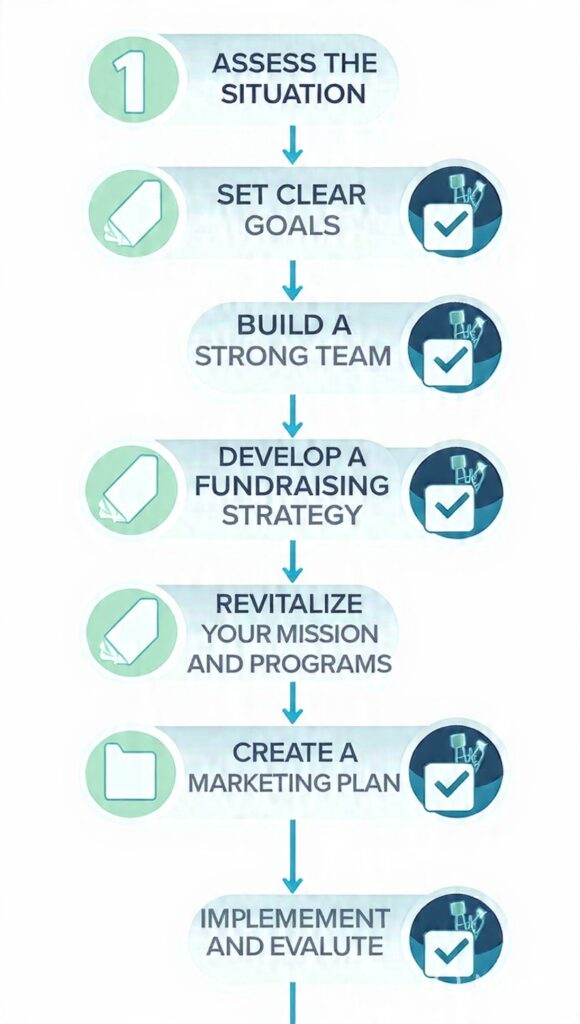
Save Your Nonprofit: A Step-by-Step Plan
Hey there, nonprofit rockstar! Are you ready to create a plan to save your nonprofit? Let’s get this JUMPSTARTED!
*Step 1: Assess the Situation*
Take a deep breath and gather your financials, mission statement, and program data. Identify the challenges you’re facing and prioritize them. Get to the root of your problem you want to solve.
*Step 2: Set Clear Goals*
Define what saving your nonprofit means to you. Is it increasing funding, revamping programs, or rebuilding your team? Get specific!
*Step 3: Build a Strong Team*
Gather a dedicated group of stakeholders, including board members, staff, and community leaders. Assign roles and responsibilities to ensure everyone is working towards the same goals.
*Step 4: Develop a Fundraising Strategy*
Explore diverse funding sources, such as grants, donations, and social enterprise initiatives. Create a compelling case for support and engage your community.
*Step 5: Revitalize Your Mission and Programs*
Revisit your mission statement and ensure it aligns with your current goals. Assess your programs’ impact and make adjustments as needed.
*Step 6: Create a Marketing Plan*
Develop a strong brand identity and communicate your story effectively. Leverage social media, email marketing, and storytelling to reach your audience.
*Step 7: Implement and Evaluate*
Put your plan into action, track progress, and make adjustments as needed. Celebrate your successes and learn from your challenges!
Knowing Your Customer
The customer in a non profit organization is a different perspective.
When it comes to non-profit organizations, the concept of a “customer” can be a bit fuzzy. Unlike for-profit businesses, non-profits often have a mission driven focus rather than a profit-driven one. So, who is the customer in a non-profit organization? In my experience working with non-profits, I’ve seen that the customer can take many forms.
Here are a few examples
The people or cause the non profit is serving.Like the student recipients of your scholarship program.
The members. The People giving their time and energy to support the non-profit’s mission.
The prospective members. The people who are not part of your non profit yet, but are on the radar as people you would want to be part of your group.
The community.The broader community the non-profit is serving or impacting.
Understanding who your customer is can help non-profits focus their efforts, tailor their messaging, and ultimately achieve their mission.
People are the customers of a non profit, and if you don’t understand people, you don’t understand non profits.
One of the larger issues non profits are dealing with, is they mostly are staffed and run by the Baby Boomer generation and Generation X.
However now 40-50% of your available customer base is now made up of Generation Y (also known as the millennials) and Generation Z.
As a business and trust me when I say this every non profit as a holder of an IRS designation like a 501C is a business.
You might call it a club or a church, or any number of other names but in fact it is a business. As a business, you cannot afford to ignore potentially 40-50% of your potential customer base. In a best case look you will loose income, members, and the most important an exit strategy.
This is your first step in understanding your customer. And hopefully this helps define for you who exactly that customer is. So now that you know them you are going to need to spend some time figuring out how to make them welcome.
GTKUN
The get to know us night is long held successful method for getting people into your nonprofit. It employs some aspects of Sociology, Psychology, and TQM (Total Quality Management) theories.
I personally have been using it since 1994 when I learned it from the Human Resources Department at the phone company. It was created to lay off 3,000 people from an 8,000-person workforce and it be their idea. It is very good at getting people to do things that they would not just automatically do. It does make some assumptions however,
A. People want to do good things.
Where it is true that good people are capable of doing truly horrible things when their environment dictates they do. It is equally true that truly horrible people are capable of doing truly selfless acts if the environment to do so is presented to them. So we are going to allow them to create the environment of their dreams. It allows them to create a group that allows them be the best version of themselves. A utopia of sorts that will help many ways.
B. Perceived indebtedness.
Most people are not good receivers. They like being self sufficient and they are most uncomfortable. When the balance is off. Any woman who went out on a date when the male spends a bunch of money on her feels that indebtedness and its unwritten expectations, and we want to do just that. Put them in a place where they feel that owe us something.

C. Many hands make light work.
Most nonprofits are in business to do good things. They can have a huge impact. A much larger impact than most individuals can. Everyone knows this and we are going to use that to our advantage.
Get as many guests as you can, have every member you have bring one or two people to participate in the evening. They will be subject Matter Experts or SMEs and you are looking for their advice. No more, no less. Set a date far enough in advance to get people to come out. Try to get 15-20 people out as guests. Pepper the group with your own members, run them through a rehearsal for how the evening is to go, I am going to say this now and you will hear it later in this article. Remember Fantasy Island? Remember the beginning? “Smiles everyone smiles!” Now is NOT the time for disagreements, arguments, or negativity.
Now get these 5 steps down with every one of your group.
1. Cause them to feel like they owe you something.This is done with serving a dinner. And make it a nice dinner. Not break the bank but not spaghetti and sauce either. Work out a menu that everyone can deal with. Stay away from seafood or pork to be safe.
2.Tie them into your team.Nothing makes someone merge into a team like asking them for help. So tell them straight out, that I invited you here to ask for your help. It disarms them, it makes them feel good. Name the group tell them they are subject matter experts. (SMEs) It also breaks the feeling like you just roped them into a time share presentation! Tell them the OES story of its creation by starting with “Let me catch you up, the group was formed by our founder in whatever time period, yada yada yada….” At the end explain that the group has shrunk to fighting trim, skeleton crew, lean and mean, walking wounded, or whatever you would describe your group as. Just be sure to say our officers are repeating their terms and they are quickly running out of ideas and in that vein, we need their advice.
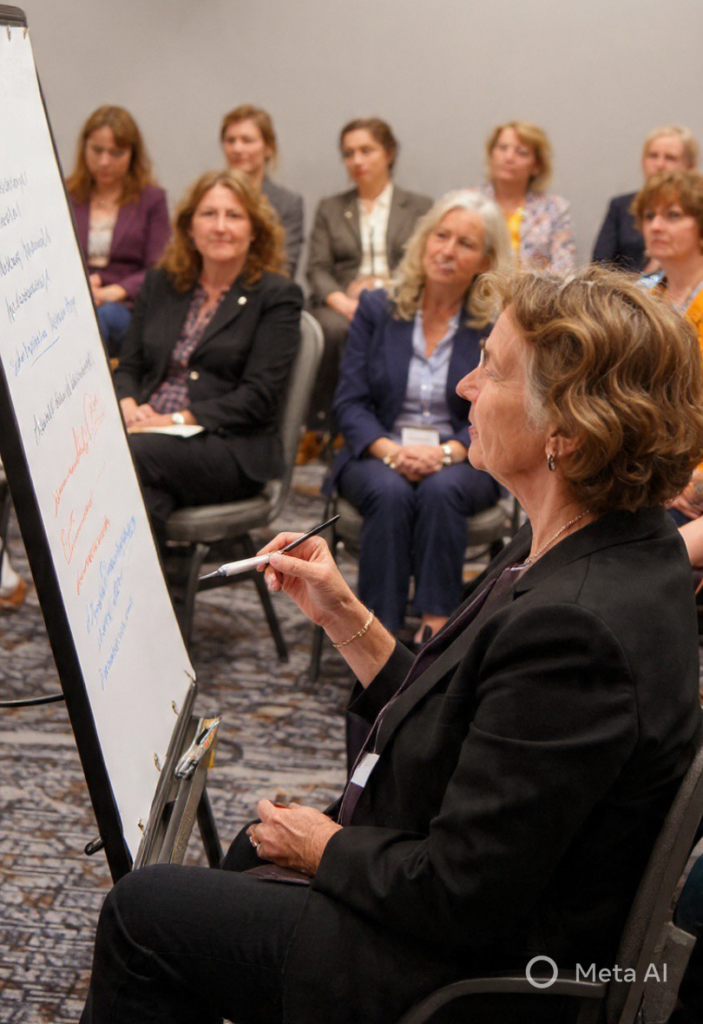
3. Let the customer design your product. First rule in sales in my mind after 20 years in that end of the business is “carry a product the customer cannot live without.” To do that you need to let the customer tell you what that is. In our case a place they can go socially, make an impact, fix some problems, have some fun, be accepted and supported. To that end you will want to get an easel a BIG red marker, appoint a secretary to write on the easel. and ask the first question: What charity to you think needs help and is worthy of it. NO ANSWER IS A DUMB ANSWER! Write down each answer and don’t forget to ask questions about anything that is not obvious to everyone. Explain that we do not have a bottomless treasury and that every dollar put to the charity will need to be replaced which leads us to our Next question: what is the most successful fundraiser you have ever seen, heard of, or attended. In a new page have your secretary write these down and again ASK QUESTIONS! Every interaction gets them closer to signing on the line which is dotted so engage engage engage! What is a calendar party, how does that work? A Pounding? What is a pounding? How does that work? Second to last question: “Helping all these people can take an emotional toll, and we need to have some fun in the process. So what are the best most fun group activities they have ever seen or been to or part of?” The devil again is in the details. “A cruise? Ok, are you thinking car? Ship? Train?” Get them to expand on their answers. Bring in the next person planning their term. Show them the results of the Subject Matter Experts, and let him or her engage in questions on the three lists. Keep in mind the SMEs do not need feedback, so no: “we tried that and it failed, or that’s not going to work.” Or any negativity. And ask that person: “Can you plan a term supporting these charities, by employing these fund raisers, and plan these activities?” And when they say yes, say to your group “ are YOU GUYS SURE that if a group featured a plan to support these charities, with these fund raisers, and did these activities, that you as an average person, would want to be part of such a group? Of course they will answer yes, because they just created utopia!
4. Show them that you value them and their time.Finish up with thanking them for their time, there is coffee and cake, and please get home safe, because they have been so much help.
5. The assumption close.DO NOT ASK THEM TO JOIN. Have a pile of petitions handy or a swag bag with one in it and some free gifts and you should get back at least 50% of them as new members.
As a note here… you need to follow through. If you say you are going to support that charity, then make sure that happens. Fastest way to loose someone is to ask their advice and then not take it. Or at least you need a good reason not to.
And there you are. The best method I have ever used to got new members. Go with God and make it work for you.